What is the main takeaway from “Why Your Gums Are Measured at Dental Visits”?
Ever hear 2, 3, 5, or 6 during a gum exam? Learn why deeper pockets may point to gum inflammation or infection that needs more than a routine cleaning.
Periodontal Care
Private, Family Owned. Elevated Care.
A team that genuinely listens.
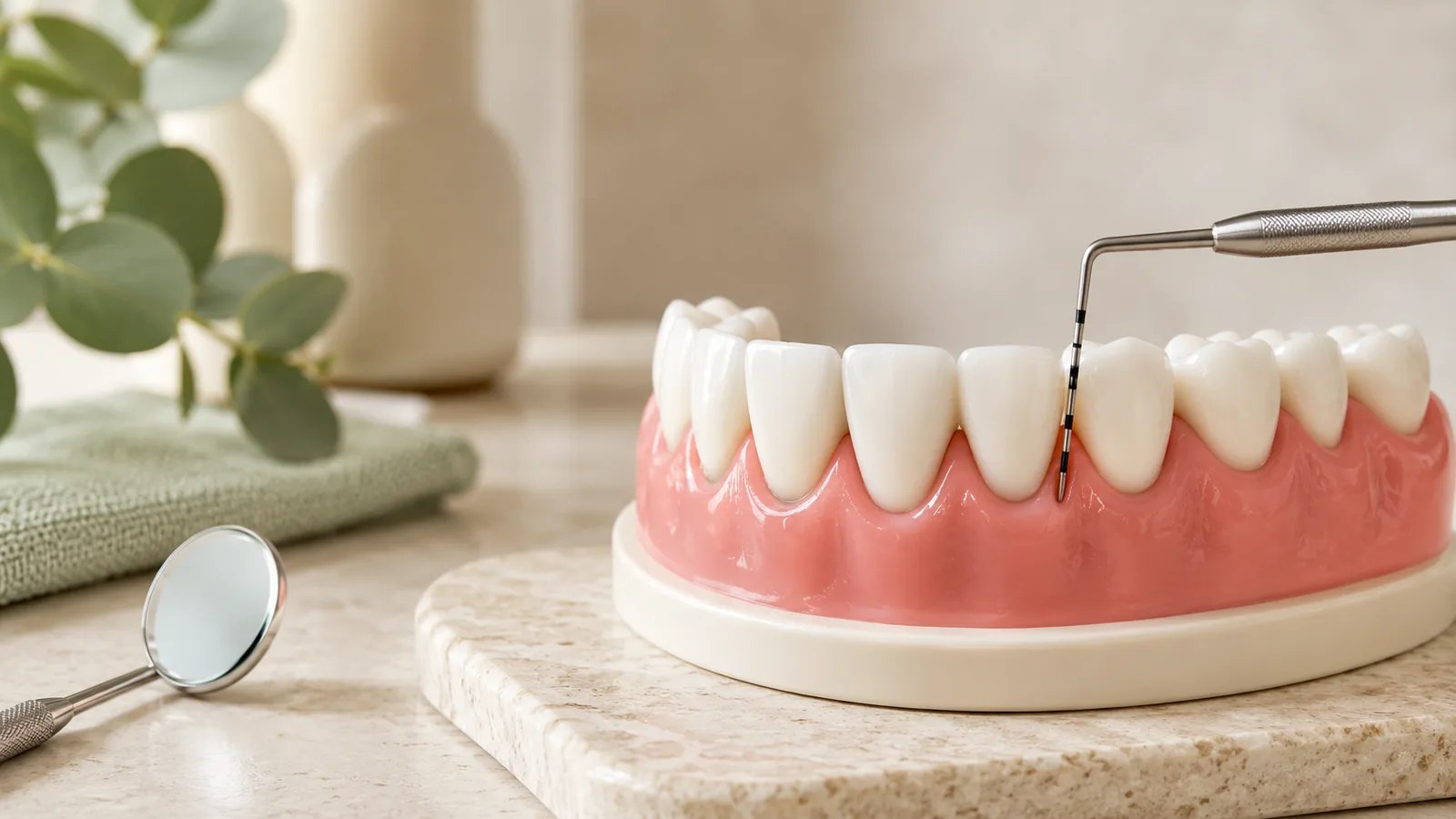
During a gum exam, the dental team measures the small space between the tooth and gum. A helpful analogy is a turtleneck sweater around the tooth: the measurement tells us how deep that space is. Healthy measurements are generally around 1–3 mm. Deeper numbers can mean the gums are inflamed, plaque and tartar are collecting below the gumline, or bone support has changed. These measurements help determine whether a routine cleaning is enough or whether gum infection therapy may be needed. That makes periodontal charting less mysterious and helps patients understand why bleeding and pocket depths matter. The dentist or hygienist should review the findings in context rather than treating one number as the entire diagnosis.
For patients in McKinney, Prosper, Frisco, and nearby North Texas communities, the goal is a clear, dentist-confirmed explanation instead of guessing from symptoms alone.
A clearer explanation shows the difference between occasional irritation and a pattern that points to gum inflammation. Patients often blame themselves or assume bleeding is normal because it has happened for years. Regular bleeding with brushing or flossing is common, but it is not the goal. Healthy gums generally should not bleed during normal home care.
Dr. Nguyen often explains that plaque and tartar around the gums can trigger the body’s immune response. The “turtleneck sweater” analogy can make periodontal charting easier to understand: the gum wraps around the tooth, and deeper spaces are harder to keep clean.
After diagnosis, care may include gum infection therapy when indicated, home-care coaching, and a follow-up visit around 4–6 weeks when appropriate to check how the gums respond. Pocket depths, bleeding, tartar, X-rays, and home-care patterns are reviewed together before recommending a routine cleaning, gum infection therapy, or monitoring.
What patients can do next depends on the exam, gum measurements, X-rays when appropriate, home-care habits, medical history, and a careful conversation about risk and goals.
Online information can help you learn the vocabulary, but it cannot examine your teeth, gums, bite, X-rays, or photos. The MDRN Dental Studio team can look at the full picture and explain whether monitoring, prevention, or treatment makes sense for your situation.
You can also learn more about periodontal care and gum infection therapy or MDRN as a McKinney dentist.
If this topic sounds familiar, schedule an exam or consultation so the dentist can evaluate your teeth, gums, bite, X-rays, photos, and goals before recommending a plan.
Clear Answers for Patients
Ever hear 2, 3, 5, or 6 during a gum exam? Learn why deeper pockets may point to gum inflammation or infection that needs more than a routine cleaning.
Patients should ask MDRN Dental Studio about gum infection therapy and periodontal care when they notice symptoms, have questions about timing or treatment options, or want a dentist to evaluate whether monitoring, prevention, or treatment is appropriate for their situation.
MDRN Dental Studio uses a comprehensive exam, appropriate imaging, clear explanations, and conservative treatment planning so patients understand their options before making a decision. Dr. Steven Nguyen should confirm any diagnosis or treatment recommendation during an appointment.
Ready to Book?
Tuesday–Friday 9AM–6PM, Monday and Saturday appointments by appointment only, and same-day emergencies available. Booking takes less than two minutes.
6451 W University Dr, Ste 300 · McKinney, TX 75071