Wisdom Tooth Removal
Wisdom Tooth Removal in McKinney, TX
Gentle, imaging-guided extractions with sedation options to keep you completely at ease from start to recovery.
Special Offer
New Patient Specials
Know where you stand before making any decisions.
Wisdom Tooth Evaluation
FREE
Includes a review of your X-rays or 3D imaging to assess whether removal is recommended and what to expect from the procedure.
For New Patients Only. Must mention this offer at time of booking.
Book Free EvaluationWhy It Matters
Why Wisdom Teeth Can Cause Problems
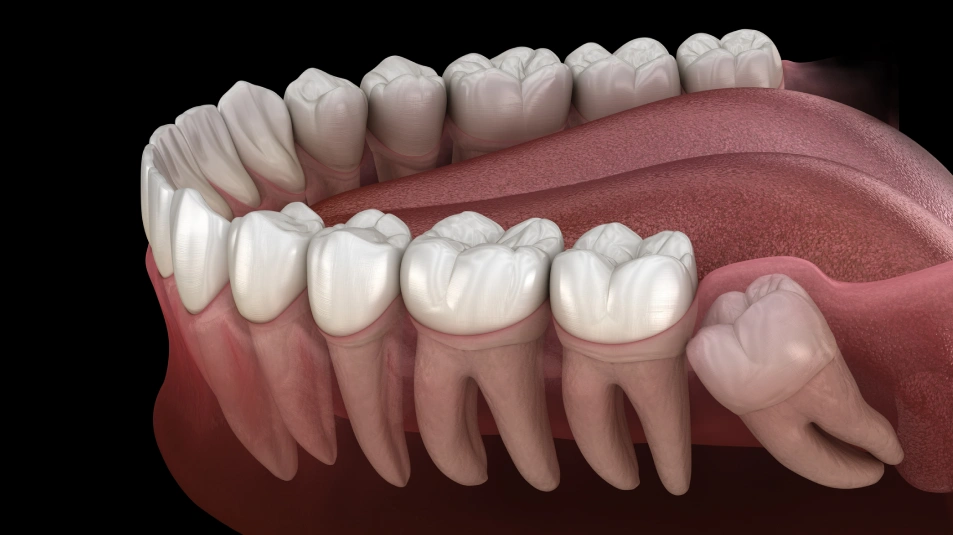
The human jaw often does not have enough room for four additional molars. When wisdom teeth cannot fully erupt, they become impacted: trapped against neighboring teeth, angled incorrectly, or partially covered by gum tissue that is chronically infected. The damage done by impacted wisdom teeth, including bone loss, root resorption in neighboring teeth, and recurring infection, often happens silently before any pain is felt. Dr. Steven uses 3D CBCT imaging to evaluate each wisdom tooth individually and provide a clear, specific recommendation.
Book your wisdom tooth evaluation
Common Reasons for Removal
Why Wisdom Teeth Are Removed
Impaction
Wisdom teeth that cannot fully erupt become trapped against the neighboring tooth or within the jaw. Impaction causes pain, pressure, infection, and damage to adjacent teeth and bone.
Overcrowding
When there is insufficient room in the arch, emerging wisdom teeth push against the second molars. This can shift the bite and, in patients who have completed orthodontic treatment, undo that work.
Infection and Decay
Partially erupted wisdom teeth create a flap of gum tissue that traps bacteria and is nearly impossible to clean. This leads to pericoronitis (infection around the crown) and decay in both the wisdom tooth and the neighboring molar.
Cysts and Structural Damage
Fluid-filled sacs can form around impacted wisdom teeth and silently erode surrounding bone, damage neighboring tooth roots, and compromise nerve function if left unaddressed.
Signs You May Need Removal
Symptoms Worth Evaluating
Not all wisdom tooth problems are painful. Some present silently until they are found on X-rays. These are the most common signs worth bringing up at your next visit.
- Pain or pressure in the back of the mouth or jaw
- Swelling, redness, or tenderness around the gums at the back of the mouth
- Difficulty or pain when opening wide
- Recurring infections in the area of the wisdom teeth
- Crowding or shifting of the front teeth
- A bad taste or odor near the back of the mouth
- Visible partial eruption with surrounding inflamed gum tissue
What to Expect
Your Extraction, Step by Step
Evaluation and 3D Imaging
A CBCT (cone beam 3D) scan gives Dr. Steven a precise view of each wisdom tooth's position, angulation, root development, and relationship to the inferior alveolar nerve and adjacent teeth. This eliminates guesswork and informs a safer extraction plan.
Personalized Treatment Plan
Dr. Steven walks you through exactly what to expect, including which teeth need removal, the recommended anesthesia or sedation option, and what recovery will look like based on your specific anatomy.
Comfortable Extraction
The procedure is performed with local anesthesia. Oral conscious sedation is available for patients who prefer a more relaxed experience. Most extractions, even surgical ones, are completed within an hour.
Recovery Support
Clear written aftercare instructions are provided before you leave. Dr. Steven or a member of the team follows up to confirm your recovery is progressing normally. Most patients return to regular activity within two to four days.
Further Reading
Learn More About Wisdom Tooth Removal
FAQs
Frequently Asked Questions
Does everyone need their wisdom teeth removed?
Not necessarily. Wisdom teeth that are fully erupted, properly aligned, healthy, and easy to clean may not require removal. Dr. Steven evaluates each tooth individually based on its position, the available space, and any symptoms or structural concerns. The goal is always the most conservative approach appropriate for your situation.
When is the best time to remove wisdom teeth?
The late teens to mid-twenties is generally optimal. At this stage the roots are not fully formed, the surrounding bone is less dense, and healing tends to be faster and more predictable. That said, wisdom teeth can be removed at any age when they are causing problems. Earlier is easier, but it is never too late.
What type of anesthesia is used?
Local anesthesia is used for all extractions. Oral conscious sedation is available for patients who want a more relaxed experience. Dr. Steven will discuss both options and help you choose based on your comfort level and the complexity of the extraction.
What should I expect during recovery?
Most patients experience two to four days of swelling, soreness, and mild fatigue. Swelling peaks around day two and then gradually resolves. Soft foods and limited activity are recommended for the first few days. Full healing of the surgical site takes approximately two weeks, though most patients feel close to normal within a week.
How do I manage pain after the extraction?
For post-extraction discomfort, taking acetaminophen (Tylenol, 500mg) and ibuprofen (Advil or Motrin, 800mg) simultaneously is more effective than either medication alone. This combination is safe for most healthy adults at these doses. Take as directed and with food. Antibiotics will be prescribed if indicated. Do not take both medications at the same time if you have contraindications; Dr. Steven will review your medications before treatment.
What is dry socket and how do I avoid it?
Dry socket occurs when the blood clot that forms in the extraction site is dislodged or dissolves prematurely, exposing the underlying bone. It causes significant pain typically starting two to four days after extraction. To prevent it: avoid straws for at least 72 hours, do not smoke, avoid spitting forcefully, and eat only soft foods for the first few days. Following the post-operative instructions carefully makes dry socket uncommon.
Why does Dr. Steven use 3D imaging for wisdom teeth?
Standard two-dimensional X-rays show the shape of the roots but cannot reliably show the three-dimensional relationship between the tooth and the inferior alveolar nerve, which runs directly below the lower wisdom teeth. CBCT imaging gives Dr. Steven a three-dimensional view of that anatomy, which is important for planning safe extractions and avoiding nerve-related complications.
Can my wisdom teeth affect my other teeth?
Yes. Impacted wisdom teeth can push against the adjacent second molars and cause root resorption (where the pressure dissolves the neighboring root). They can also shift the alignment of the front teeth over time. Monitoring wisdom teeth before they cause damage is one of the reasons Dr. Steven evaluates them at routine checkups.
Earlier Is Easier
Address Wisdom Teeth Before They Become a Problem
A quick evaluation tells you whether your wisdom teeth need to come out now, need monitoring, or can be left alone. Call (469) 712-2046 to book at MDRN Dental Studio in McKinney, TX.
6451 W University Dr, Ste 300 · McKinney, TX 75071