Can a dentist help with jaw pain or TMJ symptoms?
Yes. A dentist trained in bite function can evaluate jaw pain, clenching, worn teeth, headaches, and clicking to see whether the joint, bite, or muscles are contributing to the problem.

TMJ / TMD Treatment
Jaw pain, clicking, headaches, and worn teeth often trace back to the same source. Dr. Steven identifies the root cause and treats it correctly.
Short Answer
If jaw soreness, clicking, headaches, limited opening, or tooth wear keeps coming back, a TMJ/TMD evaluation can help identify whether your joint, bite, muscles, or clenching habits are part of the problem. At MDRN Dental Studio in McKinney, Dr. Steven starts with a conservative exam and explains whether monitoring, a custom appliance, bite evaluation, physical therapy, or specialist referral makes sense for your situation.
Special Offer
Book now and save with our limited-time offers.
TMJ Evaluation
FREE
Includes a clinical jaw joint assessment, symptom review, and discussion of whether conservative treatment or further evaluation is recommended.
For New Patients Only. Must mention this offer at time of booking.
Book Free ConsultationDo You Recognize These?
TMD symptoms are often dismissed as tension headaches, stress, or normal aging. Many patients live with these for years before connecting them to a jaw joint problem.
What Drives TMD
Grinding or clenching teeth, often during sleep, places significant repetitive force on the TMJ and surrounding muscles. Over time this leads to joint inflammation, muscle soreness, and worn teeth.
When upper and lower teeth do not come together evenly, the jaw compensates by shifting position. This chronic compensation strains the joint and the muscles that control jaw movement.
Like any joint, the TMJ can develop arthritis or internal derangement of the disc that sits within it. These structural changes alter joint mechanics and cause pain, clicking, and limited range of motion.
Stress-related jaw clenching, tension from posture, or prolonged opening (such as during a long dental procedure) can trigger or worsen TMD symptoms by fatiguing the muscles around the joint.
How We Treat It
Dr. Steven's approach to TMD follows the evidence: start conservatively, confirm the jaw position before any permanent treatment, and only proceed with irreversible steps when the diagnosis is certain.
A small, precisely designed appliance that contacts only the front teeth. By removing all posterior tooth contact, it allows the jaw muscles to fully relax and the joint to seat in its most comfortable, unstrained position. Dr. Steven uses the Kois Deprogrammer as a first diagnostic step before any irreversible treatment is considered. This is a core component of his Kois Center training.
Once the jaw has been deprogrammed and a stable position identified, a custom-fitted nightguard is fabricated from digital impressions using the Trios intraoral scanner. This precision appliance protects the teeth and joint from the forces of nighttime grinding. It is designed from an accurate bite record, not from a generic tray.
In some cases, subtle reshaping of specific tooth surfaces can improve the evenness of bite contact and reduce the strain on the joint. This is always done conservatively and only after thorough evaluation.
When bruxism has caused significant wear to the teeth, crowns, veneers, or composite bonding may be used to restore lost tooth structure and stabilize the bite. Restorative work is always coordinated with joint management so the final result is both aesthetically sound and functionally stable.
For cases involving significant muscle tension or postural involvement, Dr. Steven coordinates with physical therapists who specialize in jaw and cervical spine rehabilitation. A team approach often produces the most durable outcomes.
Complex joint pathology, advanced disc displacement, or cases requiring surgical evaluation are referred to an oral and maxillofacial surgeon or TMJ specialist. Dr. Steven manages what is appropriate in a dental setting and refers early when specialist involvement is warranted.
Kois Center Training
One of the most common mistakes in TMD management is treating the teeth or the bite without first confirming where the jaw joint is most comfortable. This can lock in a position that perpetuates the problem. Dr. Steven trained at the Kois Center, where the relationship between joint position, muscle function, and occlusion is a central focus of clinical education. The Kois Deprogrammer is the first step because finding the correct jaw position must come before any restorative, orthodontic, or occlusal treatment. Once the joint is in its stable home position, everything else can be planned with confidence.
Book your free TMJ evaluation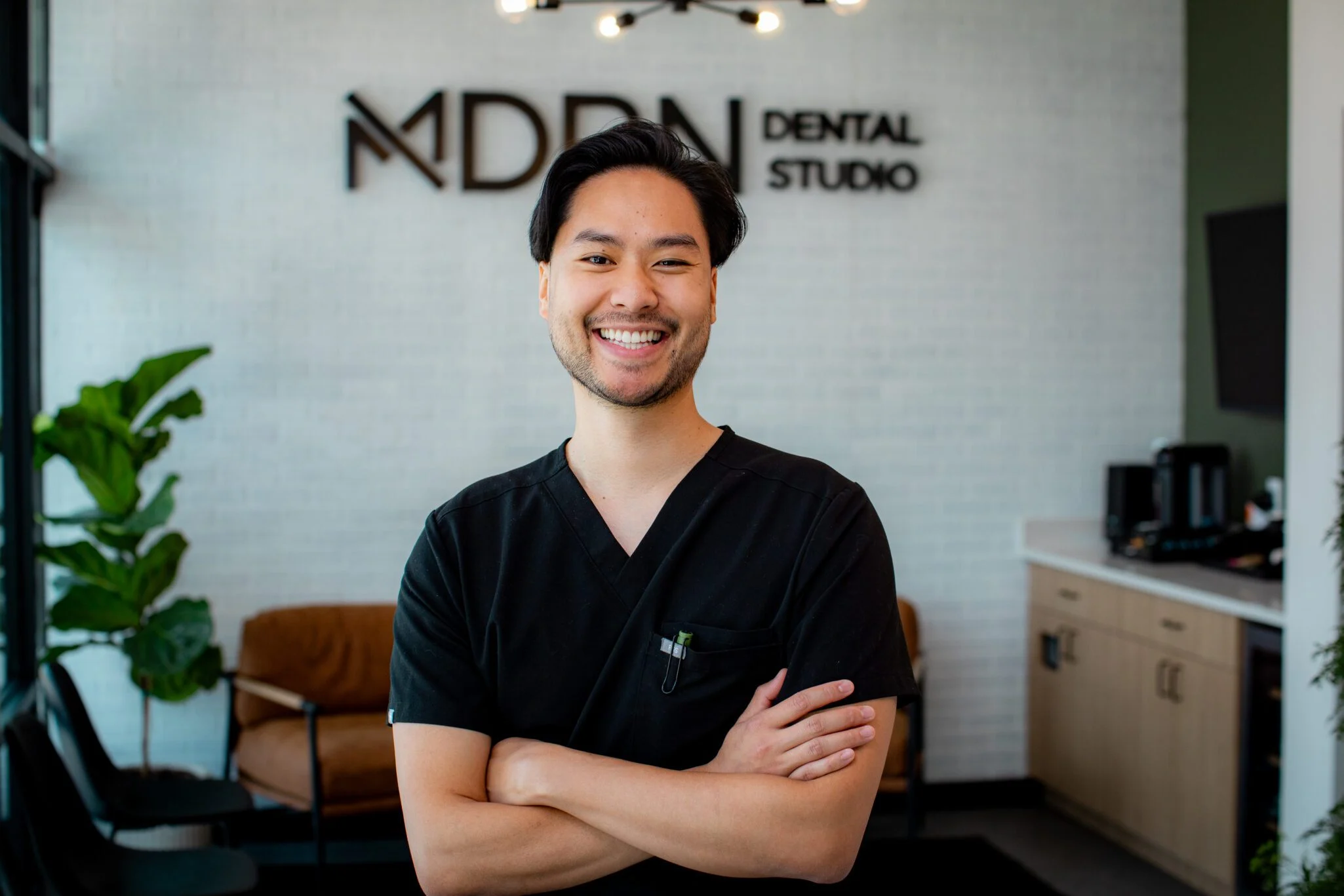
Clear Answers for Patients
These are the kinds of questions we talk through during consultations, so you can understand your options before making a decision.
Yes. A dentist trained in bite function can evaluate jaw pain, clenching, worn teeth, headaches, and clicking to see whether the joint, bite, or muscles are contributing to the problem.
Sometimes, but not always. Dr. Steven first looks for the jaw position and bite pattern behind the symptoms so a guard does not simply protect teeth while leaving the joint overloaded.
Schedule an evaluation if jaw pain, morning soreness, headaches, clicking, limited opening, or tooth wear keeps recurring. Early conservative care can often prevent more complicated bite and tooth problems.
MDRN manages many TMD cases with conservative dental therapy and coordinated care. If imaging, physical therapy, or specialist care is needed, Dr. Steven explains that early instead of over-treating in the dental chair.
FAQs
Yes. A dentist trained in bite function can evaluate jaw pain, clenching, worn teeth, headaches, and clicking to see whether the joint, bite, or muscles are contributing to the problem.
Sometimes, but not always. Dr. Steven first looks for the jaw position and bite pattern behind the symptoms so a guard does not simply protect teeth while leaving the joint overloaded.
Schedule an evaluation if jaw pain, morning soreness, headaches, clicking, limited opening, or tooth wear keeps recurring. Early conservative care can often prevent more complicated bite and tooth problems.
MDRN manages many TMD cases with conservative dental therapy and coordinated care. If imaging, physical therapy, or specialist care is needed, Dr. Steven explains that early instead of over-treating in the dental chair.
The TMJ is the temporomandibular joint, the hinge that connects your lower jaw to your skull on both sides. TMD stands for temporomandibular disorder, the collective term for conditions that cause pain, dysfunction, or altered mechanics in and around that joint. "TMJ" is commonly used informally to refer to the disorder, but technically TMD is the more accurate term for the condition.
The Kois Deprogrammer is a small acrylic appliance that sits on the front teeth, preventing posterior teeth from touching. When the back teeth cannot contact, the jaw muscles have nothing to brace against and fully relax. This allows the condyle (the ball of the TMJ) to seat naturally in the joint socket without muscle interference. It is used diagnostically to find the most comfortable joint position before any restorative or occlusal treatment is planned. Dr. Steven trained at the Kois Center, where this evidence-based approach to jaw joint management is a foundational component of treatment planning.
No. A Kois Deprogrammer is a diagnostic tool that contacts only the front teeth and is worn for a limited period to relax muscles and identify the stable joint position. A night guard is a protective appliance typically covering all or most teeth, fabricated after the jaw position is established. The sequence matters: treating with a night guard before deprogramming can inadvertently lock in a strained jaw position.
Symptoms including jaw pain on waking, clicking or popping sounds, headaches concentrated in the temples, ear discomfort without infection, difficulty opening wide, and worn or chipped teeth are all signs worth evaluating. A clinical examination, review of symptoms, and sometimes imaging are used to confirm whether the TMJ is the source.
In many cases, symptoms can be managed very effectively and sometimes resolved entirely, particularly when caught early and treated conservatively. Some patients require ongoing management with a night guard or periodic adjustments. The goal is always to minimize pain, protect the joint and teeth, and stabilize function for the long term.
The majority of TMD cases are managed non-surgically. Conservative approaches like the Kois Deprogrammer, a well-fitted night guard, and physical therapy resolve symptoms in most patients. Surgery is considered only when structural pathology within the joint itself requires it, and only after conservative options have been exhausted.
Yes. Once the joint and muscle situation is stabilized, worn teeth can be restored with crowns, veneers, or composite bonding. Restoring the bite to a stable, balanced position is done concurrently with the restorative work so the final result functions correctly long-term.
Stress is a significant contributing factor for many patients. Jaw clenching during stress or sleep amplifies forces on the TMJ and surrounding muscles. Addressing the physical problem is important, but reducing stress and becoming aware of daytime clenching habits can meaningfully support recovery.
Clinical Review
Dr. Nguyen is the founder and lead dentist at MDRN Dental Studio in McKinney, TX. He reviews patient education for accuracy, clarity, and conservative treatment planning.
Information on TMJ/TMD evaluation and bite-related care is written to help patients understand options before a visit, not to replace a dental exam. Recommendations still depend on X-rays or 3D imaging when appropriate, photos, gum health, bite forces, symptoms, medical history, and your goals.
Find the Source of Your Jaw Pain
A thorough evaluation finds it. Book a free TMJ consultation at MDRN Dental Studio in McKinney, TX and find out whether conservative treatment can resolve what you have been living with. Call (469) 712-2046.
6451 W University Dr, Ste 300 · McKinney, TX 75071