
What to Expect
Root Canal
A root canal removes the source of tooth pain — it doesn't cause it. Most patients are genuinely surprised by how comfortable the procedure is.
When the soft tissue (pulp) inside a tooth becomes infected or dies, a root canal removes it and seals the tooth to prevent the infection from spreading. The alternative is extraction — but saving the natural tooth is almost always the better long-term choice.
A root canal is always followed by a crown. A treated tooth without a crown is brittle and likely to fracture — making the crown appointment just as important as the root canal itself.
Root Canal Treatment
How a Root Canal Cleans and Seals the Tooth
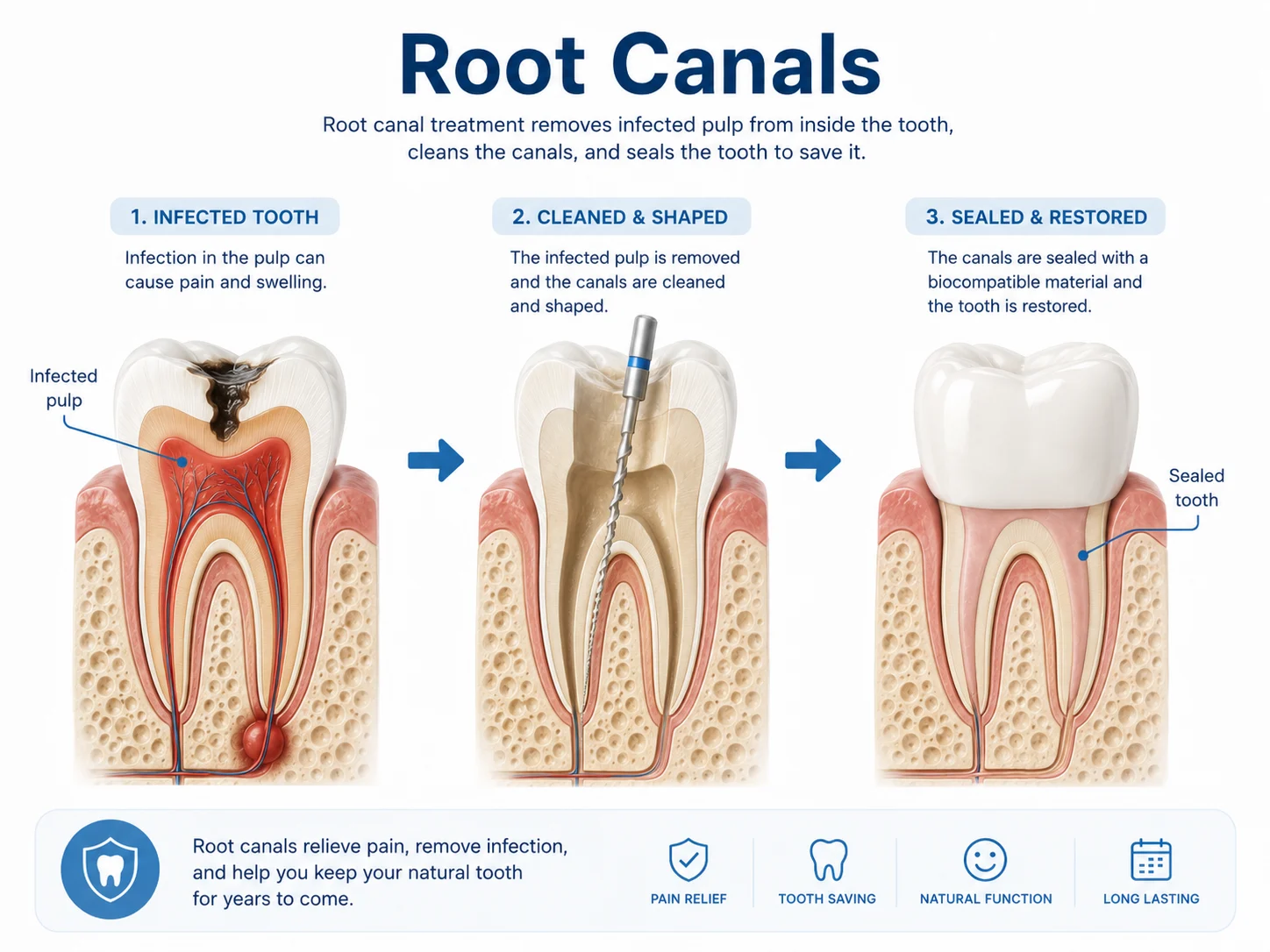
Root canal treatment removes infected pulp, cleans and shapes the canals, then seals and restores the tooth to help save it.
Your Appointments, Step by Step
Consultation & Diagnosis
30–45 minDr. Steven evaluates your symptoms, takes X-rays, and tests the tooth to confirm pulp infection or necrosis. He'll explain why the root canal is necessary, discuss the procedure and what to expect, and confirm whether the tooth is a good candidate to save. Sedation options are discussed here as well.
Root Canal Treatment
60–90 minThe tooth is thoroughly numbed — most patients are surprised by how comfortable the procedure is compared to their expectations. Dr. Steven creates a small opening in the crown of the tooth, removes the infected or dying pulp tissue, carefully shapes and cleans the canals, and seals them with a biocompatible material. A temporary filling is placed to protect the tooth until your crown is ready. The procedure relieves the source of the pain rather than causing it.
Crown Preparation
60–75 minA root-canal-treated tooth is more brittle than a natural tooth and must be crowned to protect it from fracture. The tooth is shaped, a digital scan is taken, and a temporary crown is placed. This appointment is usually scheduled 1–2 weeks after the root canal.
Crown Delivery
30–45 minYour ceramic crown is seated permanently. Dr. Steven checks the fit, bite, and appearance. Once cemented, the tooth can be brushed and flossed normally and treated exactly like any other tooth.
What to Know Before You Come In
- Take any prescribed antibiotics before your appointment if they were given in advance — they reduce inflammation and can make numbing more effective
- Eat a normal meal before the procedure — a full stomach helps with comfort, especially if anxiety is a factor
- The procedure itself is typically painless; any soreness develops 4–6 hours later as the anesthesia wears off
- Plan to take it easy the day of your root canal — most patients return to normal activity the next day
- Book your crown appointment before you leave the root canal visit — do not wait
Tooth Pain That Won't Go Away?
Don't Wait — Get It Evaluated
A root canal performed early is simpler than one performed after the infection spreads. If tooth pain is severe, lingering, or paired with swelling, call MDRN Dental Studio for an emergency dental evaluation in McKinney, TX.
6451 W University Dr, Ste 300 · McKinney, TX 75071