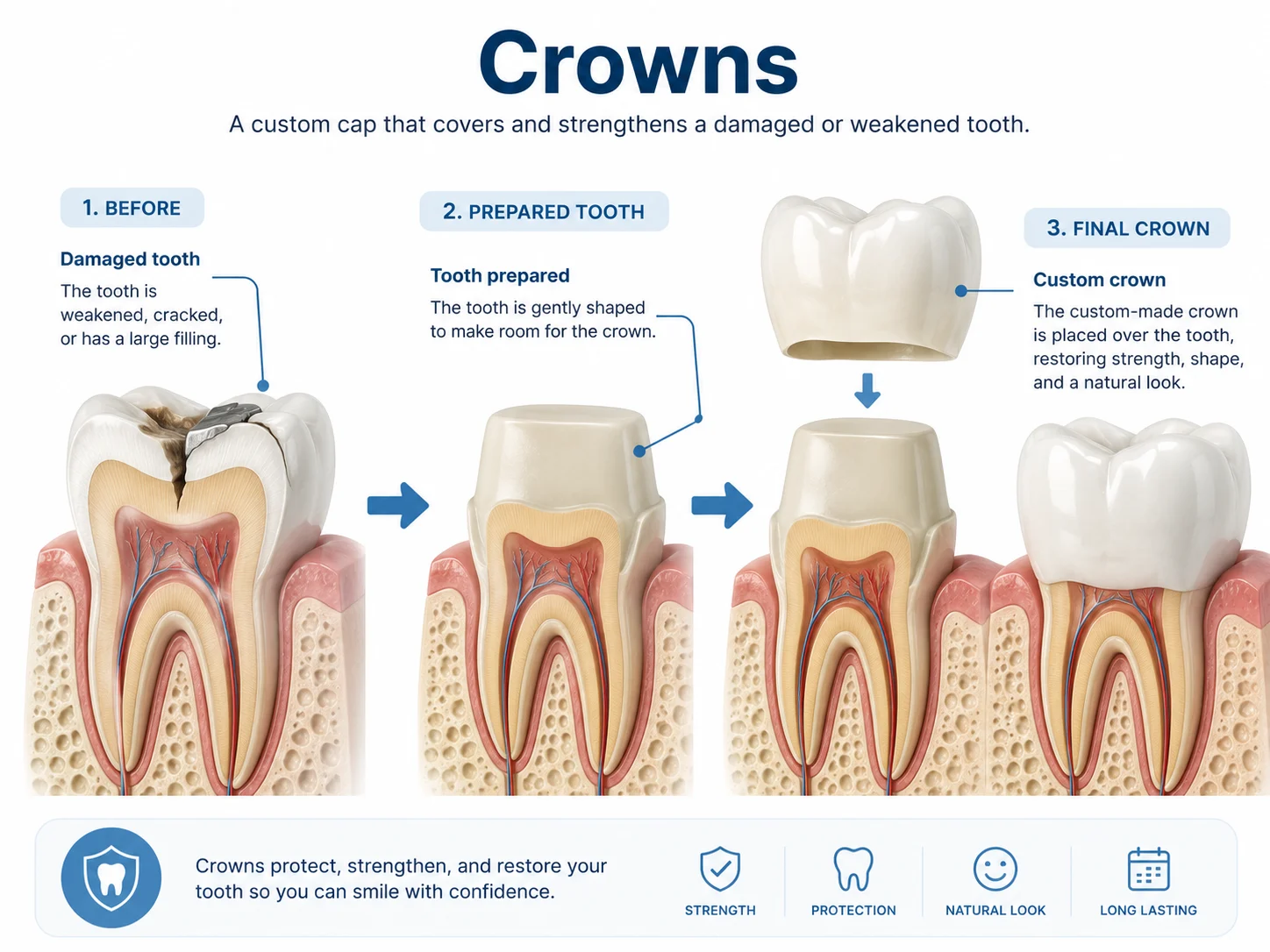
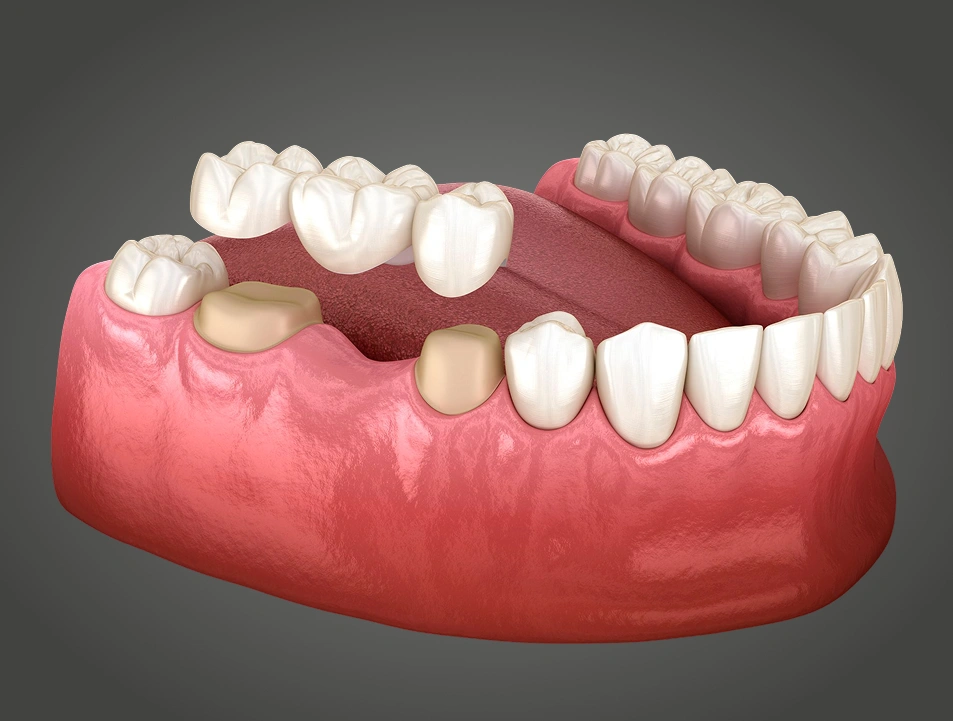
A dental crown is usually recommended when a tooth needs more protection than a filling can provide, such as after a large cavity, crack, root canal, or failing older restoration. A bridge may be considered when a missing tooth needs to be replaced without surgery, especially if the neighboring teeth also need support.
A crown covers the visible part of a damaged tooth to restore strength, shape, protection, and a natural look.
Crowns and Bridges
Restorations Built on Precision, Not Guesswork
Digital impressions captured with the Trios intraoral scanner replace traditional putty molds, sending accurate 3D data directly to the dental lab. This means better-fitting restorations, fewer adjustments at placement, and a more comfortable experience throughout. Crown and bridge fabrication uses high-strength zirconia and ceramic materials designed to match both the function and the appearance of natural enamel. Dr. Steven evaluates each case with the full picture of your bite, gum health, and long-term goals before recommending a restoration.
A crown fully covers and protects the portion of the tooth above the gumline, restoring its strength, shape, and appearance. Common clinical indications include:
Severely decayed tooth where a filling is no longer sufficient
Cracked or fractured tooth at risk of splitting
Following root canal treatment to protect the tooth
Large existing filling that has failed or broken
Worn-down tooth from years of grinding
Cosmetic reshaping of a misshapen or undersized tooth
Anchor crown for a dental bridge
Cap for a dental implant abutment
Crown Materials
What Your Crown Is Made Of
The right material depends on the tooth location, bite forces, and aesthetic requirements. Dr. Steven selects the appropriate material for each case.
Zirconia
The preferred material for most modern crowns. Zirconia is extremely durable, biocompatible, tooth-colored, and does not corrode. It is used for both back teeth requiring strength and front teeth requiring aesthetics.
Porcelain-Fused-to-Metal (PFM)
A porcelain exterior over a metal substructure. Durable and aesthetic, though the metal margin can occasionally show at the gumline over time. Still a reliable option for certain clinical situations.
Full Porcelain (E.max)
Lithium disilicate ceramic offering excellent translucency and natural light-scattering properties. Preferred for front teeth where appearance is the priority and bite forces are lower.
Dental Bridges
Replacing Missing Teeth Without Surgery
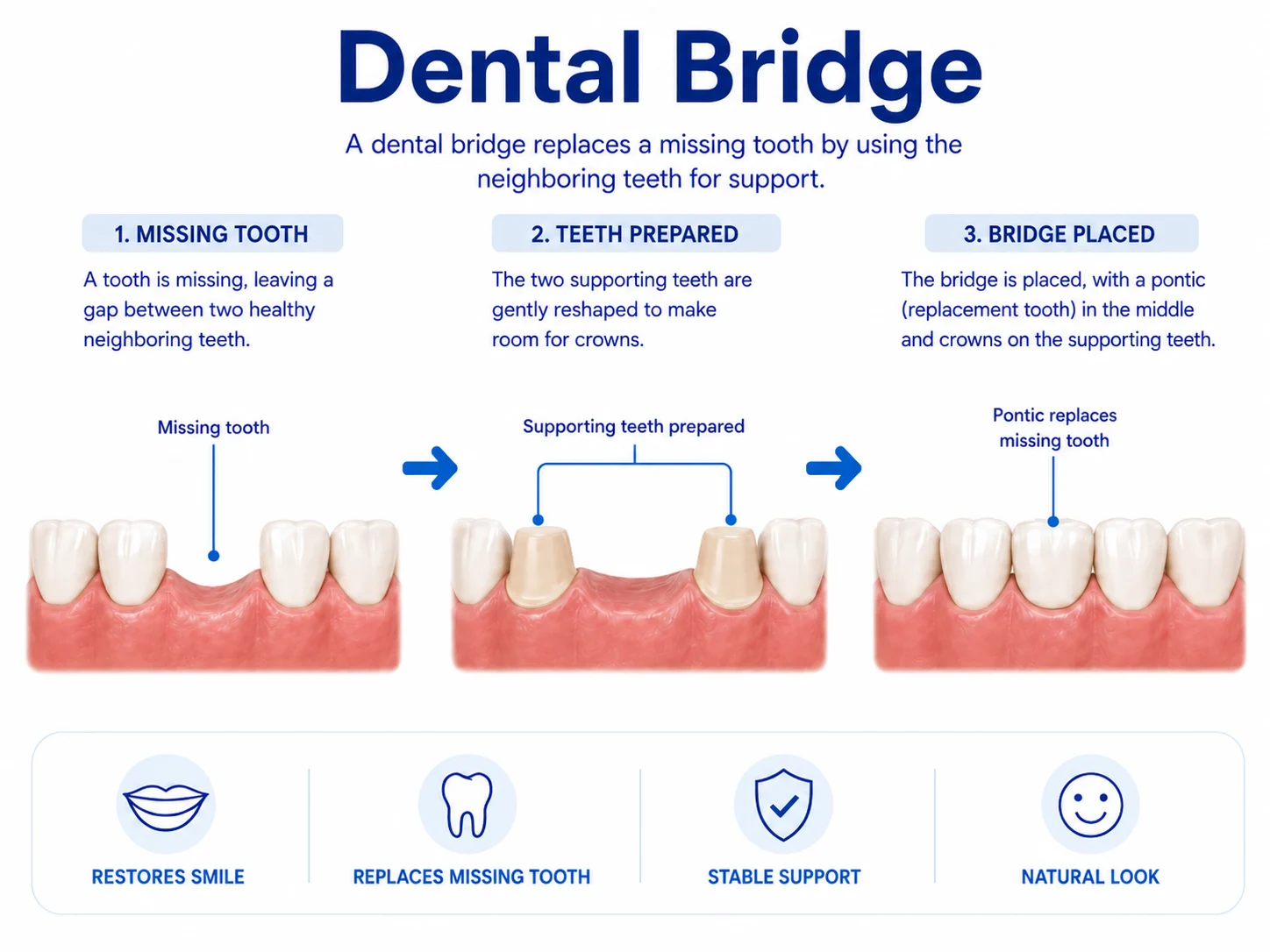
A bridge spans the gap left by one or more missing teeth, anchored by crowns on the adjacent teeth. It restores function, prevents neighboring teeth from drifting, and maintains your bite alignment.
01
Evaluation and Planning
Dr. Steven assesses the gap, the health and suitability of the adjacent teeth, and your bite. Digital X-rays and sometimes CBCT imaging confirm the bone level and root anatomy of the abutment teeth.
02
Tooth Preparation
The two teeth on either side of the gap are prepared by reducing their outer surface to accommodate the crowns that will anchor the bridge. This step is precise and performed under local anesthesia.
03
Digital Impressions and Temporaries
Digital impressions captured with the Trios intraoral scanner replace traditional putty molds, sending precise 3D data to the dental lab. Custom temporary restorations protect the prepared teeth during the fabrication period.
04
Final Placement
The permanent bridge is tried in, adjusted for fit and bite accuracy, and permanently bonded. The result: a complete, natural-looking restoration that fills the gap and restores full function.
Dental Bridges
How a Dental Bridge Replaces a Missing Tooth
A bridge uses neighboring teeth for support so the replacement tooth can restore chewing, stability, and your smile.
Crowns, bridges, and implants can overlap in some situations. These questions help you understand what MDRN looks at before recommending one path over another.
How do I know if I need a crown instead of a filling?
A filling may be enough for a small or moderate cavity. A crown is usually recommended when the tooth has lost too much structure, has a crack, has had root canal treatment, or needs full coverage to handle normal biting forces.
When is a bridge a good option for a missing tooth?
A bridge can be a good fit when the teeth next to the gap already need crowns or when a patient prefers a non-surgical replacement. If the neighboring teeth are healthy, an implant may be discussed because it replaces the missing tooth without reshaping adjacent teeth.
Can MDRN repair a broken crown or lost crown?
Yes. If a crown breaks, feels loose, or comes off, MDRN can evaluate the tooth, check for decay or fracture, and determine whether the crown can be recemented, repaired, or replaced.
What should I compare before choosing a crown, bridge, or implant?
The right choice depends on the health of the tooth or gap, the condition of nearby teeth, bone support, timeline, budget, and long-term maintenance. Dr. Steven walks through those tradeoffs before recommending a plan.
Local Care in McKinney
Dental Crowns and Bridges in McKinney for Damaged or Missing Teeth
If you are comparing dental crowns in McKinney or wondering whether a bridge is the right way to replace a missing tooth, MDRN Dental Studio focuses on strength, fit, appearance, and bite stability. The goal is to restore the tooth without making treatment feel more complicated than it needs to be.
Why local patients choose MDRN
Modern ceramic and zirconia options are selected based on tooth location, bite force, and cosmetic goals.
Digital X-rays and careful bite evaluation help determine whether a crown, bridge, implant, or filling is most appropriate.
Emergency crown visits are available for broken teeth, lost crowns, and pain when the schedule allows.
Serving McKinney and nearby communities
MDRN Dental Studio is located on W University Dr in McKinney, making focused dental care convenient for patients from:
How do I know if I need a crown instead of a filling?
A filling may be enough for a small or moderate cavity. A crown is usually recommended when the tooth has lost too much structure, has a crack, has had root canal treatment, or needs full coverage to handle normal biting forces.
When is a bridge a good option for a missing tooth?
A bridge can be a good fit when the teeth next to the gap already need crowns or when a patient prefers a non-surgical replacement. If the neighboring teeth are healthy, an implant may be discussed because it replaces the missing tooth without reshaping adjacent teeth.
Can MDRN repair a broken crown or lost crown?
Yes. If a crown breaks, feels loose, or comes off, MDRN can evaluate the tooth, check for decay or fracture, and determine whether the crown can be recemented, repaired, or replaced.
What should I compare before choosing a crown, bridge, or implant?
The right choice depends on the health of the tooth or gap, the condition of nearby teeth, bone support, timeline, budget, and long-term maintenance. Dr. Steven walks through those tradeoffs before recommending a plan.
How long do dental crowns last?
With good oral hygiene and regular checkups, zirconia and porcelain crowns typically last 15 years or more. The longevity depends on the material selected, the bite forces the crown is subjected to, and how consistently you maintain your hygiene and monitoring appointments.
Will my crown look natural?
Yes. Zirconia and porcelain crowns are shaded to match the adjacent teeth. Dr. Steven uses digital shade matching and reviews the result against your natural enamel before permanent placement. The goal is a crown that no one can identify at normal conversational distance.
What is the difference between a crown and a bridge?
A crown covers and protects a single existing tooth. A bridge spans a gap where one or more teeth are missing. The bridge is anchored by crowns placed over the teeth on either side of the gap, with a suspended pontic (artificial tooth) in between.
How does a bridge compare to a dental implant for replacing a missing tooth?
A bridge is a non-surgical option that works well when the adjacent teeth already need crowns or restorations. An implant replaces the tooth root independently, preserving the bone beneath the missing tooth and leaving adjacent teeth untouched. Implants are generally the preferred long-term solution when adjacent teeth are healthy, but bridges remain an excellent option in the right clinical situation.
Does getting a crown require two appointments?
Typically, yes. The first appointment prepares the tooth, takes digital impressions, and places a temporary. The permanent crown is placed at the second appointment, usually two to three weeks later once fabrication is complete.
Does getting a crown hurt?
The preparation is done under local anesthesia, so you feel pressure but not pain. Some sensitivity when the anesthetic wears off is normal and temporary, typically resolving within a few days as the tooth adjusts to the new crown.
Can a cracked tooth always be saved with a crown?
It depends on how far the crack extends. If the crack is confined to the crown portion of the tooth, a crown typically holds it together and prevents further propagation. If the crack extends into or below the root, extraction and replacement may be necessary. Early evaluation gives the best chance of saving the tooth.
How do I care for a crown or bridge?
Brush and floss normally. For bridges, a floss threader or water flosser is helpful for cleaning under the pontic. Avoid biting hard objects (ice, hard candy, fingernails) that could chip the ceramic. If you grind your teeth at night, a custom night guard significantly extends the lifespan of crowns and bridges.
Dr. Nguyen is the founder and lead dentist at MDRN Dental Studio in McKinney, TX. He reviews patient education for accuracy, clarity, and conservative treatment planning.
Information on dental crowns and bridges is written to help patients understand options before a visit, not to replace a dental exam. Recommendations still depend on X-rays or 3D imaging when appropriate, photos, gum health, bite forces, symptoms, medical history, and your goals.
Conservative focusPreserving healthy tooth structure is considered whenever it is clinically appropriate.
Advanced trainingDr. Nguyen brings Kois Center training and continuing education into diagnosis and treatment planning.
Clear next stepsThe goal is to explain why each option may be recommended, so you can make an informed decision.
Free Restorative Consultation
Protect Your Teeth Now
Restore Before Small Problems Become Big Ones
A cracked tooth left untreated can split and require extraction. A crown placed early saves the tooth. Call (469) 712-2046 or book a free consultation at MDRN Dental Studio in McKinney, TX.
6451 W University Dr, Ste 300 · McKinney, TX 75071