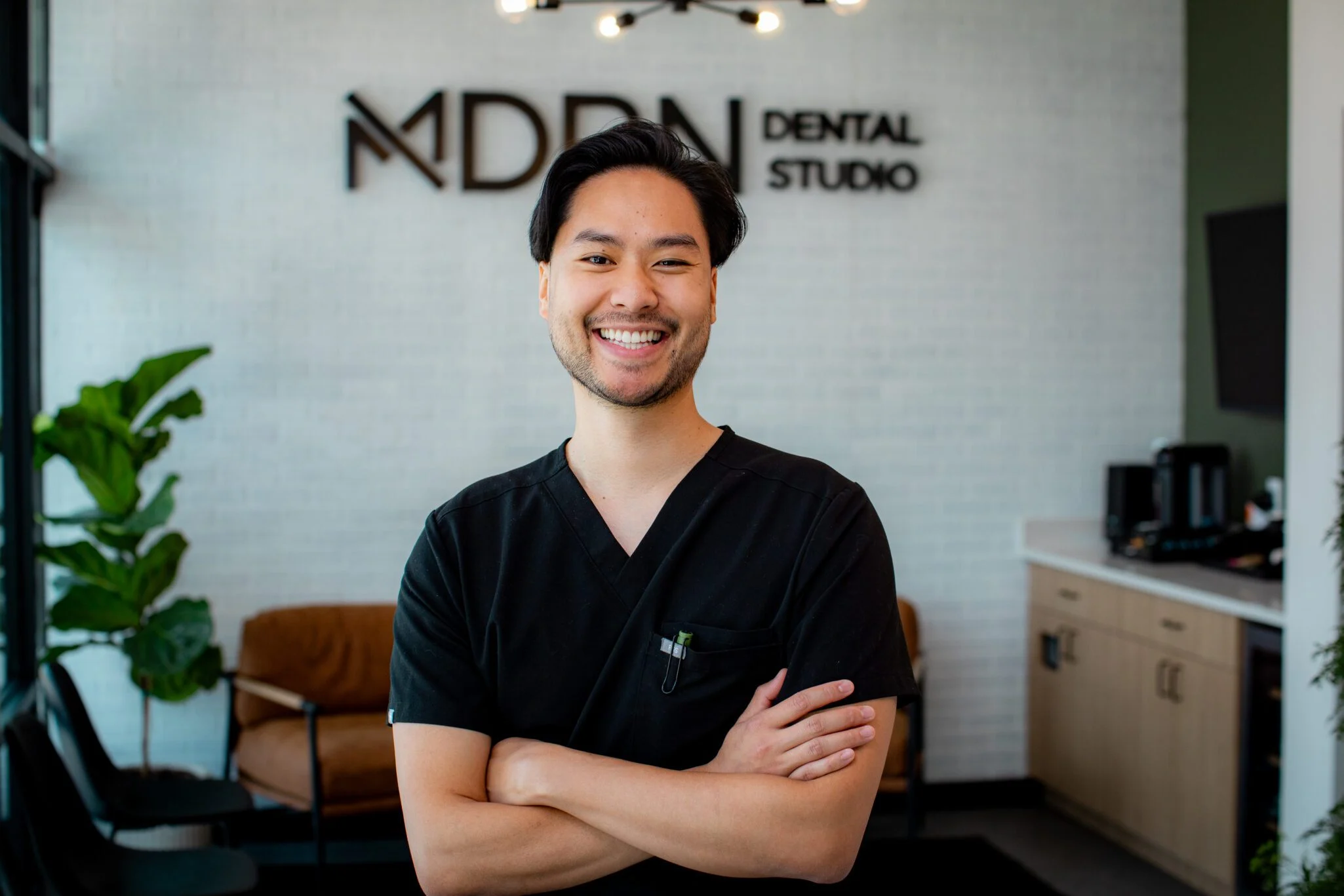
Patient smiling after conservative dental care at MDRN Dental Studio in McKinney, TX

Conservative Dentistry

Conservative Dentistry in McKinney, TX

Advanced restorative care focused on preserving healthy tooth structure and helping dental treatment last.

Our Philosophy

Conservative Does Not Mean Doing Less. It Means Doing What Is Right.

At MDRN Dental Studio, conservative dentistry means planning treatment with long-term tooth health in mind. Dr. Steven Nguyen evaluates how much healthy tooth structure remains, how the tooth is weakened, where chewing forces are concentrated, and what type of restoration will protect the tooth most predictably. The goal is to preserve as much natural tooth as possible while still giving the tooth the strength, seal, and support it needs.

Book a consultation
Dr. Steven Nguyen discussing conservative dental treatment planning at MDRN Dental Studio

Biomimetic-Inspired Care

Biomimetic Dentistry Is Part of the Philosophy, Not a Rigid Label

Dr. Steven has advanced training in biomimetic dentistry, adhesive dentistry, and modern restorative techniques. Those principles influence how he thinks through fillings, onlays, overlays, crowns, cracked teeth, old fillings, and other restorative needs.

At MDRN Dental Studio, biomimetic dentistry is not treated as a separate category or one-size-fits-all system. It is part of a broader conservative dentistry philosophy: preserve healthy tooth structure, bond predictably, reduce unnecessary stress on the tooth, and choose the treatment that gives each tooth the best long-term prognosis.

Sometimes that means a small bonded filling. Sometimes it means an onlay, overlay, or crown. The recommendation depends on the tooth, not a label.

Core Principles

How Conservative Dentistry Guides Treatment

The details behind a restoration matter. Preparation design, bonding protocol, material choice, and bite management all affect how the tooth performs over time.

Preserve what is healthy

Healthy enamel and dentin are valuable. Dr. Steven removes damaged tooth structure carefully while preserving sound tooth structure whenever the tooth safely allows it.

Bond with intention

Adhesive dentistry is technique-sensitive. Moisture control, surface preparation, dentin sealing, material selection, and curing all matter for a restoration that is designed to hold up over time.

Support the tooth, not just the filling

Large fillings, weakened cusps, cracks, and old restorations need a plan for how chewing forces move through the tooth. Sometimes that means an onlay, overlay, or crown instead of another large filling.

Choose the right level of treatment

Conservative dentistry is not undertreating. It means choosing the least aggressive option that still gives the tooth appropriate strength, protection, and prognosis.

Advanced Bonding Protocols

The Bond Matters as Much as the Restoration

A restoration is only as reliable as the connection between the tooth and the material placed on it. Dr. Steven uses controlled bonding protocols with attention to isolation, cleaning, surface preparation, adhesive technique, dentin sealing when appropriate, layering, curing, and bite adjustment. Patients do not need to know every technical step, but those steps help create a better seal, reduce sensitivity risk, and support the long-term performance of the restoration.

Ask about conservative options
Modern restorative dental technology at MDRN Dental Studio in McKinney, TX

Onlays, Overlays & Crowns

The Right Amount of Coverage for the Tooth

Not every damaged tooth needs the same type of restoration. A small cavity may need a bonded filling. A tooth with a weakened cusp may need an onlay. A broader chewing-surface fracture may need an overlay. A tooth with major structural loss may need a crown.

The conservative choice is the option that protects the tooth without removing more healthy structure than necessary. Dr. Steven reviews the remaining tooth structure, crack patterns, X-ray findings, bite forces, and prognosis before recommending the level of coverage.

Learn more about dental onlays and dental overlays if you are comparing options for a cracked, weakened, or heavily restored tooth.

Bonded tooth-colored fillings

For smaller cavities or chips, composite bonding can restore the tooth in one visit while preserving healthy tooth structure.

Onlays

Onlays can reinforce one or more weakened cusps when a tooth needs more support than a filling but may not need full crown coverage.

Overlays

Overlays protect more of the chewing surface when broader reinforcement is needed, while still preserving natural tooth structure in select cases.

Crowns when needed

Some teeth truly need full coverage. When a crown is the best long-term option, Dr. Steven explains why and designs it to protect the remaining tooth.

Conservative Preparation

Air Abrasion When It Supports the Case

Air abrasion uses a fine stream of particles to clean or prepare certain tooth surfaces. It is not needed for every procedure, and it does not replace every traditional preparation technique. When appropriate, it can support conservative preparation, surface cleaning, and bonding protocols while helping preserve healthy tooth structure. The bigger point is intentional treatment: remove what needs to be removed, preserve what can be preserved, and create a clean foundation for the restoration.

Tooth-colored restorative materials used for conservative dental treatment

When It Helps

Common Situations Where Conservative Planning Matters

Conservative dentistry can influence many restorative decisions, especially when a tooth is weakened but may still have healthy structure worth preserving.

Deep cavities

After decay is removed, Dr. Steven evaluates whether the tooth can be sealed and reinforced with a bonded restoration or needs more protective coverage.

Large old fillings

Older fillings can crack, leak, or weaken surrounding tooth structure. Another large filling is not always the best long-term solution.

Cracked teeth

Cracks can progress even when there is little pain. Careful evaluation helps determine whether bonding, an onlay, overlay, or crown is appropriate.

Chipped or fractured teeth

A small chip may need bonding, while a larger fracture may need more support depending on how much tooth structure is missing.

Weakened cusps

Cusps that are thin, cracked, or unsupported may need reinforcement so chewing forces do not split the tooth further.

Teeth at risk for crowns

Some teeth can be restored conservatively. Others truly need full coverage. The goal is to choose wisely before more tooth structure is removed.

Clear Answers for Patients

Questions Patients Ask About Conservative Dentistry

These are common questions we talk through when comparing fillings, onlays, overlays, crowns, and biomimetic-inspired restorative options.

Is conservative dentistry the same as biomimetic dentistry?

Not exactly. Biomimetic dentistry influences Dr. Steven’s approach, but MDRN Dental Studio does not treat it as a rigid or separate category. The broader goal is conservative, long-term restorative care that preserves healthy tooth structure whenever appropriate.

Does conservative dentistry mean avoiding crowns?

No. It means not defaulting to a crown when a more conservative restoration can predictably protect the tooth. If a tooth needs full coverage for strength or prognosis, a crown may still be the right recommendation.

What are onlays and overlays used for?

Onlays and overlays can protect weakened chewing surfaces, cusps, cracks, or large old fillings. They may offer more support than a filling while preserving more tooth structure than a full crown in the right case.

Why do bonding protocols matter?

The bond between the tooth and restoration affects the seal, strength, sensitivity risk, and long-term performance. Careful bonding protocols help the restoration work with the tooth instead of simply filling space.

FAQs

Frequently Asked Questions

Is conservative dentistry the same as biomimetic dentistry?

Not exactly. Biomimetic dentistry influences Dr. Steven’s approach, but MDRN Dental Studio does not treat it as a rigid or separate category. The broader goal is conservative, long-term restorative care that preserves healthy tooth structure whenever appropriate.

Does conservative dentistry mean avoiding crowns?

No. It means not defaulting to a crown when a more conservative restoration can predictably protect the tooth. If a tooth needs full coverage for strength or prognosis, a crown may still be the right recommendation.

What are onlays and overlays used for?

Onlays and overlays can protect weakened chewing surfaces, cusps, cracks, or large old fillings. They may offer more support than a filling while preserving more tooth structure than a full crown in the right case.

Why do bonding protocols matter?

The bond between the tooth and restoration affects the seal, strength, sensitivity risk, and long-term performance. Careful bonding protocols help the restoration work with the tooth instead of simply filling space.

What is conservative dentistry?

Conservative dentistry is a tooth-preserving approach to dental care. It focuses on removing damaged tooth structure carefully, preserving healthy enamel and dentin when possible, and choosing restorations that support long-term tooth health.

When might Dr. Steven recommend an onlay or overlay?

An onlay or overlay may be recommended when a tooth has a large old filling, weakened cusp, crack risk, broken tooth structure, or deep decay that needs more support than a basic filling can provide.

What is air abrasion in dentistry?

Air abrasion uses a fine stream of particles to clean or prepare certain tooth surfaces. It is not used for every case, but in select situations it can support conservative preparation, surface cleaning, or bonding protocols.

How do I know if I need a filling, onlay, overlay, or crown?

The right option depends on how much healthy tooth structure remains, whether cracks are present, how large the cavity or old filling is, the bite forces on the tooth, symptoms, X-ray findings, and long-term prognosis. Dr. Steven reviews these factors before recommending treatment.

Conservative Restorative Care

Protect Your Tooth Before the Problem Gets Bigger

If you have a cavity, chipped tooth, cracked tooth, large old filling, or weakened restoration, Dr. Steven can help you understand whether a filling, onlay, overlay, crown, or another option is the best fit. Call (469) 712-2046 or book online.

6451 W University Dr, Ste 300 · McKinney, TX 75071