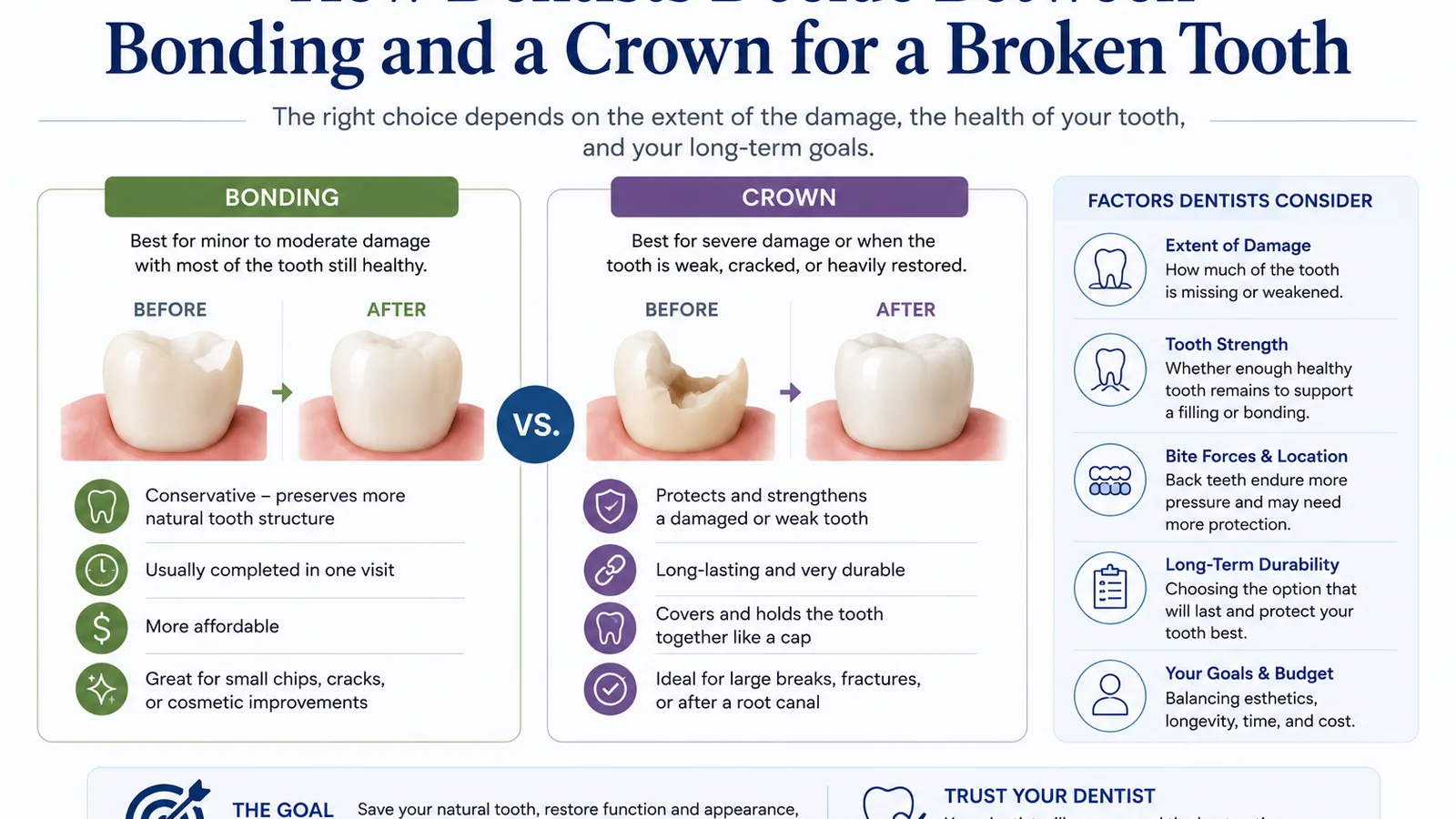
Dental bonding can be a great option for some chips, especially when the damage is small and enough healthy tooth structure remains. But bonding is not always strong enough for larger fractures, heavy bite forces, deep cracks, or teeth with large existing fillings. In those situations, a crown, onlay, or overlay may provide better support. The MDRN team bases that decision on where the tooth broke, how much structure remains, whether the crack extends deeper, how the bite comes together, and the patient’s goals. The best answer is not “bond everything” or “crown everything.” It is a careful evaluation that protects the tooth while being as conservative as the situation allows. That helps patients understand why two broken teeth may require very different solutions.
For patients in McKinney, Prosper, Frisco, and nearby North Texas communities, the goal is a clear, dentist-confirmed explanation instead of guessing from symptoms alone.
What patients may notice after a tooth breaks
Many patients ask for the treatment they have heard about online; such as veneers, bonding, whitening, or clear aligners; but the visible concern may be color, shape, position, spacing, symmetry, wear, gum display, or proportions.
How MDRN evaluates the broken tooth
MDRN may use photos, X-rays, digital scans, bite evaluation, and close visual examination to help determine whether bonding, an onlay, an overlay, a crown, or another option is appropriate.
Treatment paths that may be discussed
Maintenance and longevity matter. Bonding may be conservative and repairable for smaller breaks, but it may be more prone to staining or chipping in high-stress areas. Crowns, onlays, or overlays may provide more support when the tooth is weakened, but they involve different preparation, cost, and maintenance considerations.
Maintenance, longevity, and realistic expectations
Maintenance, longevity, and expectations should be explained in plain English so the patient understands what may need repair, polishing, replacement, or protection over time.
What MDRN can evaluate in person
Online information can help you learn the vocabulary, but it cannot examine your teeth, gums, bite, X-rays, or photos. The MDRN Dental Studio team can look at the full picture and explain whether monitoring, prevention, or treatment makes sense for your situation.
You can also learn more about restorative dentistry or MDRN as a McKinney dentist.
Questions to ask at your visit
- What findings are you seeing that make this important?
- Is this something we can monitor, or does it need treatment now?
- What are the pros, cons, timing, and alternatives for my situation?
Next steps
If you broke a tooth and are unsure whether bonding is enough, schedule an evaluation so the dentist can check the fracture size, remaining tooth support, cracks, bite, and options before recommending treatment.