What is the main takeaway from “Chipped or Broken Tooth in McKinney”?
Chipped or cracked a tooth in McKinney? Learn what to do next, when to call a dentist, and how MDRN Dental Studio explains repair options.
Emergency Dentistry
Private, Family Owned. Elevated Care.
A team that genuinely listens.
A chipped or cracked tooth can be confusing because it does not always hurt right away. You might notice a rough edge with your tongue, see a small piece of enamel missing, feel sensitivity when you drink something cold, or realize a filling or crown no longer feels right. Sometimes the tooth looks minor on the surface, but the biting surface, enamel, or older dental work may need a closer look.
If you are in McKinney, Frisco, Prosper, or a nearby area and you chip, crack, or break a tooth, the first step is to stay calm and avoid chewing on that side until a dentist can evaluate it. Some teeth can be smoothed or repaired with bonding. Others may need a stronger restoration if the tooth is cracked, weakened, or missing more structure than it appears.
This guide explains what to do in the moment, when to call a dentist, and how MDRN Dental Studio helps patients understand their options with clear photos, CBCT imaging when appropriate, careful evaluation, and a treatment plan that fits the tooth and the patient’s goals.
A chipped tooth is not always a dental emergency. If there is no pain or sensitivity, the tooth may not need a same-day visit, but it is still worth scheduling an exam so the damage can be checked before you keep chewing on it.
Some symptoms should be handled quickly. Extreme pain, significant sensitivity, or bleeding after a chip or crack are reasons the MDRN Dental Studio team may recommend a same-day evaluation when possible. Call a dentist as soon as possible if you have:
If the tooth broke because of trauma, such as a fall, sports injury, or accident, it is better to be evaluated sooner. Even when pain is mild, the tooth, gum tissue, bite, and surrounding bone may need to be checked. In certain trauma or fracture situations, CBCT imaging may be recommended to get a more complete look at the tooth and supporting structures.
For severe facial swelling, uncontrolled bleeding, trouble breathing, or major injury, seek urgent medical care first. For tooth-specific concerns, an emergency dental visit can help determine whether the tooth can be restored and how quickly treatment should happen. MDRN Dental Studio offers free emergency consultations, so patients can understand what they need without a commitment to treatment that day.
While you are waiting to be seen, a few simple steps can help protect the tooth and keep you more comfortable.
Rinse gently with warm water. This helps clear debris without scrubbing the area.
Avoid chewing on that side. A cracked or weakened tooth can split further under pressure, especially if the crack involves an old filling or thin remaining enamel.
Save any broken piece if you have it. Place it in a small bag or container and bring it to the appointment. It may not always be usable, but it can help the dentist understand what happened.
Cover sharp edges if needed. Dental wax from a pharmacy can temporarily cover a rough spot that is irritating your tongue or cheek.
Use cold compresses for swelling or soreness. Apply the compress outside the cheek in short intervals.
Choose softer foods. Avoid hard, sticky, crunchy, or very chewy foods until the tooth is evaluated.
Do not use household glue, nail products, or online repair kits on the tooth. These can irritate the tissue, make the area harder to clean, and interfere with proper dental treatment.
If the tooth is painful, follow the instructions on any over-the-counter medication you normally tolerate, unless your physician or dentist has told you not to use it. Avoid placing aspirin directly on the gum or tooth.
Some chips are mostly cosmetic. A small enamel chip may be smoothed or repaired with bonding, especially if the tooth is otherwise strong and the bite is stable.
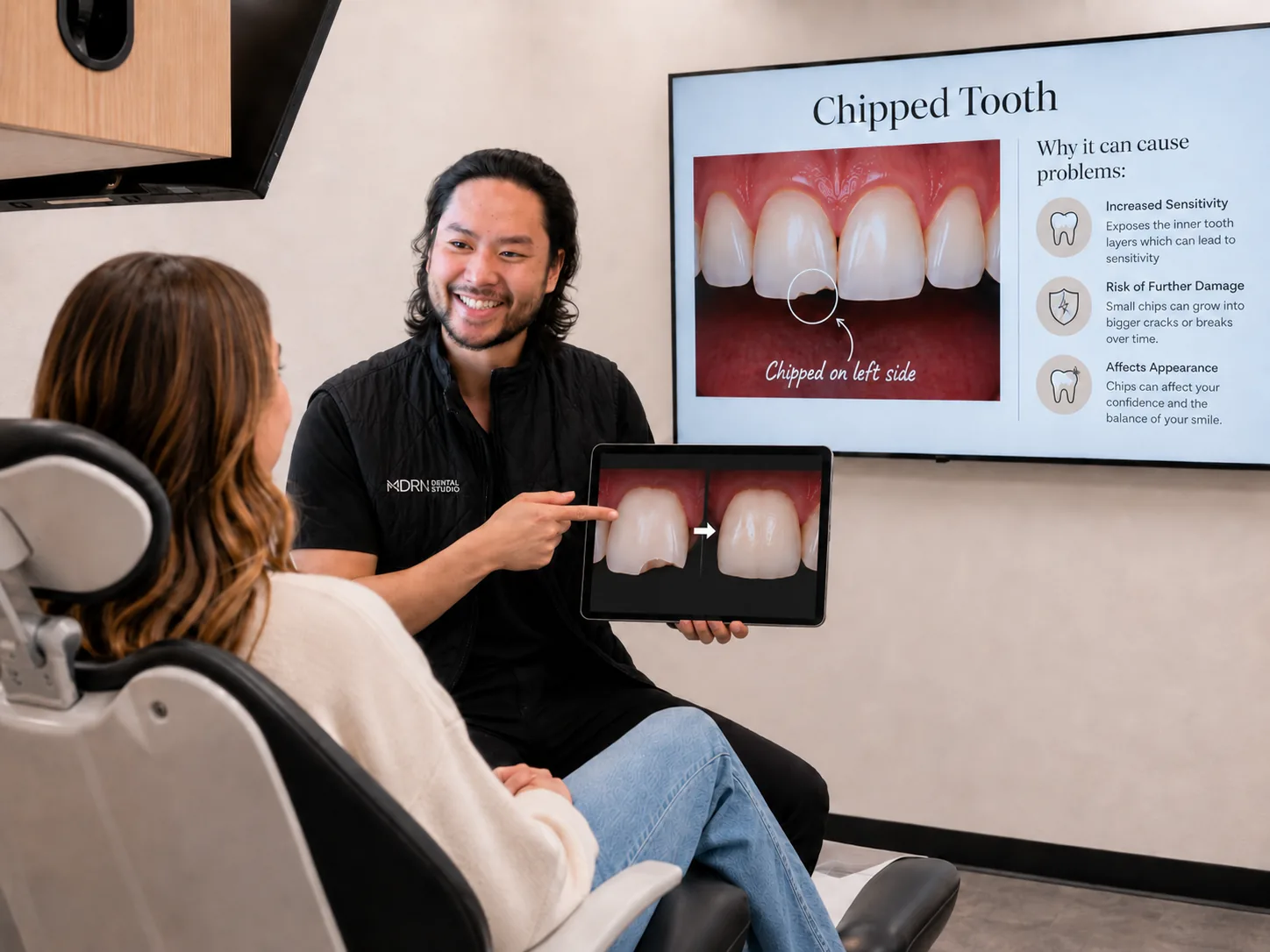
Other situations are less obvious. A tooth can have a crack line, older filling, weakened cusp, or hidden fracture pattern that is difficult to judge without an exam. MDRN Dental Studio often uses visual aids such as intraoral photos or scans when explaining what is happening. Seeing the tooth on a screen can make the recommendation easier to understand.
Patients are sometimes surprised when a tooth does not hurt but still needs support. Pain is only one clue. A tooth can be structurally weak before it becomes painful. If a crack, large filling, or missing cusp leaves the tooth vulnerable, a stronger restoration may help protect it from breaking further.
For example, a patient may come in thinking a chipped molar is minor because the tooth is still usable. If the area feels achy or sensitive, further evaluation can show that the tooth is actually cracked and needs a crown or similar restoration to support it.
That does not mean every chip needs a crown. The right option depends on how much tooth structure remains, where the crack is, how the teeth come together, whether there is decay or an old restoration, and what the patient wants for appearance, durability, timeline, and cost.
Treatment depends on the location, depth, and cause of the damage. After an exam and any needed imaging, your dentist may discuss one or more of these options.
Smoothing or polishing
For a very small rough edge, polishing may be enough to make the tooth feel comfortable again.
Tooth-colored bonding
Bonding can repair small chips, close minor defects, and improve the shape of a tooth using tooth-colored composite. It is often conservative and efficient, but it may not be the strongest choice for larger fractures or heavy biting areas. MDRN Dental Studio uses advanced bonding techniques and biomimetic dentistry principles, which means the plan is designed to preserve healthy tooth structure when possible while still creating a durable repair.
Filling replacement
If a filling broke or decay is present around an older restoration, the tooth may need a new dental filling. The dentist will check whether enough strong tooth remains to support it.
Onlay, overlay, or crown
When a tooth has lost more structure or has a crack that needs protection, a partial or full-coverage restoration may be recommended. An onlay or overlay can cover and support weakened cusps. A dental crown may be needed when the tooth requires more complete coverage. The goal is to use the most conservative treatment that can predictably protect the tooth, preserving its longevity and health instead of removing more structure than necessary.
Veneer or cosmetic restoration
For front teeth, appearance matters. If the chip affects the shape, color, or symmetry of the smile, cosmetic dentistry options may be discussed. The goal is not to push one “best” solution. The right plan depends on how much tooth structure is involved, how natural the result needs to look, and how the tooth fits with the rest of the smile.
Root canal treatment or extraction in more serious cases
If a crack reaches the nerve, the tooth is infected, or the fracture extends too far below the gumline, more advanced treatment may be needed. Your dentist can explain what is possible after evaluating the tooth. Not every cracked tooth can be saved, but many can be treated when caught early.
MDRN Dental Studio takes a clear, patient-centered approach to chipped and cracked teeth. The goal is to help you understand what happened, what your options are, and what each option is meant to solve.
A visit may include:
Depending on the repair, the visit may also involve advanced bonding steps or air abrasion to help prepare the tooth carefully for a long-lasting result. The exact technique depends on the tooth, the material being used, and how much healthy structure can be preserved.
Many patients want to know whether the least invasive option will last. Others want the most esthetic result possible. Some need to balance timing, insurance, financing, and long-term durability. The team can walk through those tradeoffs without rushing the decision or making the plan feel more complicated than it needs to be.
If you are new to the office, the patient hub can help you prepare for your visit. Patients looking for ongoing care can also review new patient specials before scheduling.
Not every chipped tooth can be prevented, but a few habits can reduce the risk.
Avoid chewing ice, hard candy, popcorn kernels, pen caps, or fingernails. These can create sudden pressure on enamel or existing restorations.
Wear a sports mouthguard for contact or high-impact activities. This is especially important for kids, teens, and adults who play recreational sports around McKinney.
Ask about a nightguard if you clench or grind. Grinding can wear teeth down and place repeated stress on fillings, crowns, and natural enamel.
Keep up with regular dental checkups. Small cracks, worn fillings, bite changes, and early decay are easier to address before a tooth breaks.
Mention any new sensitivity or rough spots. A small change can help your dentist catch an issue before it becomes urgent.
Preventive care is not just about dental cleanings. It is also about noticing patterns, explaining them clearly, and helping patients make practical choices that protect their teeth over time.
A chipped, cracked, or broken tooth is worth checking, even if it seems small. Pain can be helpful information, but it is not the only sign that a tooth needs attention. The best next step is to protect the tooth, avoid chewing on that side, and schedule an exam so the damage can be evaluated properly.
MDRN Dental Studio in McKinney helps patients understand what is happening with clear explanations, modern technology, and treatment options based on the tooth’s condition and the patient’s goals. If you notice a chip, crack, rough edge, broken filling, or uncomfortable bite, schedule a visit and bring any broken piece with you if you have it. If you are having extreme pain, significant sensitivity, or bleeding, ask about a free emergency consultation so the team can evaluate the extent of the damage.
Clear Answers for Patients
Chipped or cracked a tooth in McKinney? Learn what to do next, when to call a dentist, and how MDRN Dental Studio explains repair options.
Patients should ask MDRN Dental Studio about urgent dental symptoms and next steps when they notice symptoms, have questions about timing or treatment options, or want a dentist to evaluate whether monitoring, prevention, or treatment is appropriate for their situation.
MDRN Dental Studio uses a comprehensive exam, appropriate imaging, clear explanations, and conservative treatment planning so patients understand their options before making a decision. Dr. Steven Nguyen should confirm any diagnosis or treatment recommendation during an appointment.
Ready to Book?
Tuesday–Friday 9AM–6PM, Monday and Saturday appointments by appointment only, and same-day emergencies available. Booking takes less than two minutes.
6451 W University Dr, Ste 300 · McKinney, TX 75071