What is the main takeaway from “Dental Implant vs. Bridge”?
Compare dental implants and bridges for replacing a missing tooth, including how each works, when each makes sense, and what to ask before choosing.
Restorative
Private, Family Owned. Elevated Care.
A team that genuinely listens.
When one tooth is missing, the two most common replacement options are a dental implant or a dental bridge. Both can restore your smile and help you chew more comfortably, but they solve the problem in different ways.
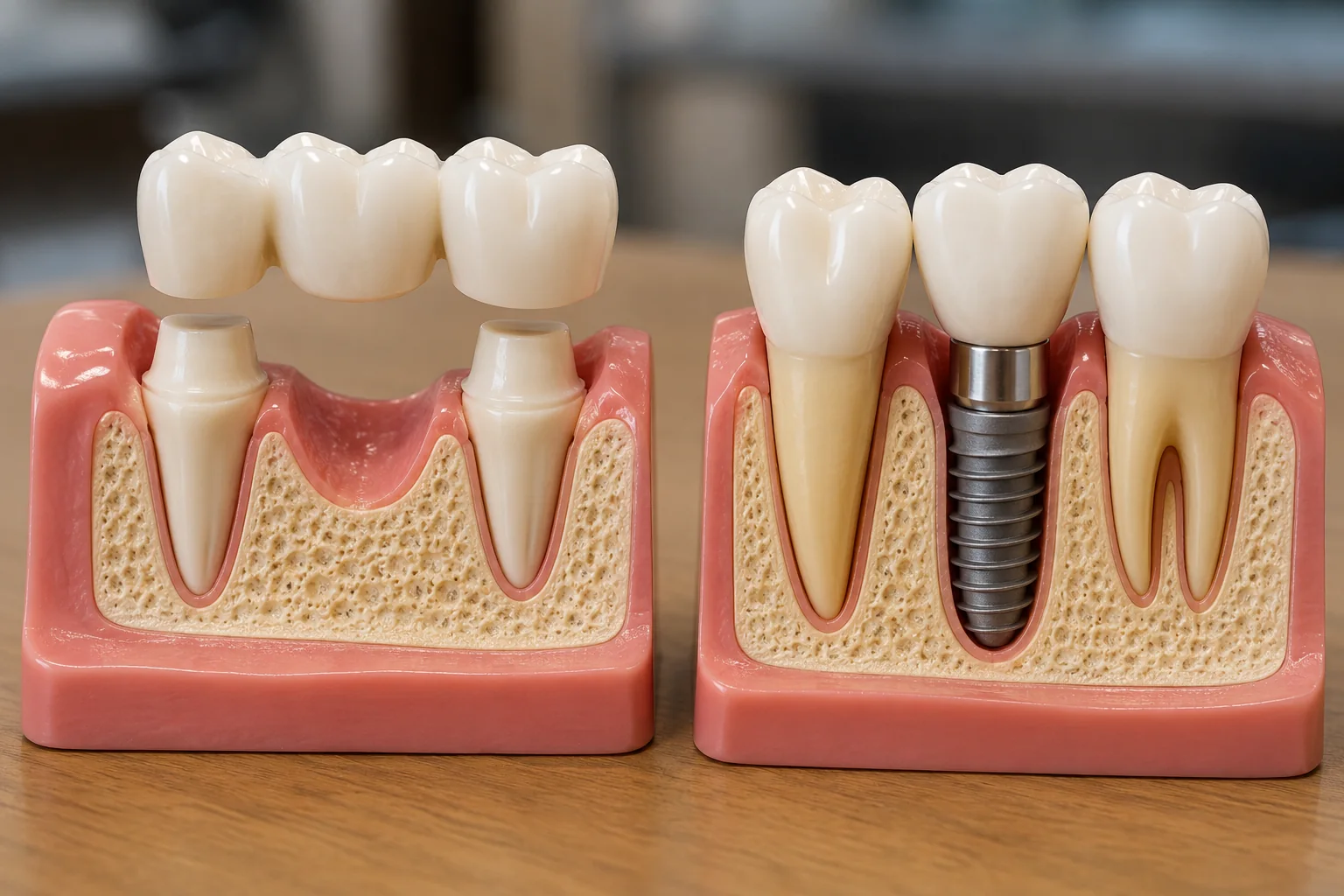
A dental implant replaces the missing tooth root with a titanium post and supports a custom crown. A bridge fills the space by using the neighboring teeth as anchors.
Neither option should be chosen from a checklist alone. The right answer depends on your bone, your bite, the health of the teeth next to the gap, your timeline, and your comfort with surgery.
A dental implant is often the preferred long-term option when the neighboring teeth are healthy. It replaces the missing tooth independently and helps preserve the bone in that area.
A bridge can be a strong option when the adjacent teeth already need crowns or when surgery is not the right fit. It can replace a tooth without placing an implant.
At MDRN Dental Studio in McKinney, Dr. Steven Nguyen evaluates the full situation before recommending one path over the other.
A dental implant is placed in the jawbone where the tooth root used to be. After healing, a connector and custom crown are attached so the replacement tooth looks and functions like a natural tooth.
Implants are often recommended because they:
The tradeoff is time and surgery. Some patients need bone grafting before or during implant treatment, and healing happens in stages.
A dental bridge uses the teeth on either side of the gap as anchors. Those teeth are prepared for crowns, and a replacement tooth is connected between them.
A bridge may make sense when:
The main tradeoff is that the neighboring teeth have to support the bridge. If they are healthy and untouched, an implant may preserve more natural tooth structure.
A dental implant usually protects the neighboring teeth better because it stands on its own. The adjacent teeth do not need to be reshaped just to fill the space.
A bridge can still be the right choice when those teeth already need crowns. In that situation, the bridge may solve two problems at once: restoring weakened adjacent teeth and replacing the missing tooth.
A dental implant helps stimulate the jawbone because it replaces the tooth root. This can help reduce bone loss in the area over time.
A bridge fills the visible gap but does not replace the root under the gums. The bone beneath the missing tooth area can continue to change because it is no longer being stimulated by a natural root or implant.
A bridge is often faster from start to finish. It usually does not require the same surgical healing time as an implant.
An implant takes longer because the implant needs time to integrate with the bone. The total timeline depends on whether extraction, grafting, healing, or other treatment is needed.
Faster is not always better. If the long-term result matters most and the conditions are right, waiting for an implant can be worthwhile.
An implant crown is cleaned more like a natural tooth: brush, floss, and keep regular checkups.
A bridge needs a little extra cleaning under the connected replacement tooth. Many patients use a floss threader, interdental brush, or water flosser to clean the area well.
Both options need regular maintenance. Gum health and bite forces matter for long-term success.
Before deciding between an implant and a bridge, ask:
These questions are easier to answer after an exam and imaging.
Choose an implant when the adjacent teeth are healthy, the bone is suitable or can be rebuilt, and you want an independent replacement designed for long-term function.
Choose a bridge when the adjacent teeth already need crowns, implant surgery is not the best fit, or your clinical situation points toward a fixed non-surgical option.
The best choice is the one that fits your mouth, not just the one that sounds best online.
Can a bridge be replaced with an implant later?
Sometimes, yes. It depends on the bone level, gum health, and the condition of the neighboring teeth.
Is an implant always better than a bridge?
No. Implants are often excellent, but bridges are still appropriate in many cases, especially when adjacent teeth need crowns.
What happens if I leave a missing tooth untreated?
Nearby teeth can shift, the bite can change, and the bone in the area can shrink. Replacing the tooth helps protect function and alignment.
Do implants and bridges look natural?
Yes, both can look natural when the shape, shade, bite, and gumline are planned carefully.
If you are missing a tooth, schedule a consultation at MDRN Dental Studio to compare implants, bridges, and the most practical path for your smile. You can also review our dental implants service page and dental implant visit guide before your appointment.
Clear Answers for Patients
Compare dental implants and bridges for replacing a missing tooth, including how each works, when each makes sense, and what to ask before choosing.
Patients should ask MDRN Dental Studio about dental implants and tooth replacement planning when they notice symptoms, have questions about timing or treatment options, or want a dentist to evaluate whether monitoring, prevention, or treatment is appropriate for their situation.
MDRN Dental Studio uses a comprehensive exam, appropriate imaging, clear explanations, and conservative treatment planning so patients understand their options before making a decision. Dr. Steven Nguyen should confirm any diagnosis or treatment recommendation during an appointment.
Ready to Book?
Tuesday–Friday 9AM–6PM, Monday and Saturday appointments by appointment only, and same-day emergencies available. Booking takes less than two minutes.
6451 W University Dr, Ste 300 · McKinney, TX 75071